Wondering why one street in West Salem feels full of older character homes while another looks distinctly mid-century or newer? That mix is part of what makes this village so interesting if you are buying, selling, or simply trying to understand the local housing landscape. When you know the styles you are seeing, it becomes easier to spot value, understand upkeep, and picture what kind of home may fit your goals. Let’s dive in.
Why West Salem Has Mixed Home Styles
West Salem has deep roots. The village was incorporated in 1851, and local planning documents note that it still includes many historic properties dating back close to that early period.
That long timeline matters because West Salem did not develop all at once. Instead, its housing stock built out over many decades, which is why you can see older in-town homes, rural-edge house forms, postwar neighborhoods, and newer subdivision housing in the same community.
The village’s 2023 comprehensive plan shows 2,041 total housing units, with detached homes making up the largest share. It also notes that more than 41% of homes were built after 1990, which helps explain why West Salem feels layered rather than tied to one single era.
Historic Styles in Older Parts of West Salem
If you spend time on older streets in the village, you may notice homes with more decorative details, unusual rooflines, or proportions that stand apart from newer construction. These are some of the clearest signs that West Salem still reflects several earlier architectural periods.
Wisconsin Historical Society records document real local examples, including Early Gothic Revival, Queen Anne, Bungalow, Prairie School, and Octagon homes. The village plan also identifies historic resources such as the Hamlin Garland Homestead and the Palmer octagon homes.
Gothic Revival Features
Gothic Revival homes tend to stand out quickly. Wisconsin SHPO describes them as having steep roofs, pointed arches, steep pointed gables, porches, and in some cases decorative elements like pinnacles or battlements.
In West Salem, a documented Early Gothic Revival example sits at 113 Jefferson St. and dates to around 1860. If you are touring older homes and notice a vertical, dramatic look with pointed details, you may be seeing this style’s influence.
Queen Anne Features
Queen Anne homes usually bring more ornament and visual variety. Common features include an asymmetrical shape, steep roofs, front-facing gables, bay windows, turrets, and wrap-around verandas.
West Salem has documented Queen Anne examples at 134 N Rose St. and 555 W Hamilton St. For buyers, these homes often stand out for their personality and curb appeal, especially compared with simpler mid-century forms.
Bungalow Features
Bungalows are generally lower and more horizontal than many Victorian-era homes. Typical features include one or two porches, wide projecting roofs, plain woodwork, exposed brackets or rafters, and a substantial chimney.
A documented local example is the Bungalow at 238 West Ave., built in 1920. If you like homes that feel compact, practical, and full of early 20th-century charm, this is one style worth watching for.
Prairie School Features
Prairie School homes often look grounded and wide rather than tall and ornate. Wisconsin SHPO notes low, long roofs, broad eaves, horizontal rows of windows, and a mix of stucco, brick, and wood materials as common traits.
West Salem includes a documented Prairie School house at 224 Van Ness St. N., also from 1920. These homes can feel especially distinctive because their design emphasizes clean horizontal lines over decorative flourishes.
Octagon Homes and Rare Finds
Some homes are memorable simply because they are uncommon. West Salem includes a documented Octagon home at 358 N Leonard St. and WI 16, and the village plan highlights octagon homes among its notable historic resources.
If you come across a house with an unusual footprint or shape, it may reflect one of these rarer historic forms. In a village with a long history, those one-of-a-kind homes add to the sense of place.
Farmhouse Forms Near the Village Edge
Not every older home in West Salem is highly decorative. On the edges of the village or in settings that feel closer to the surrounding agricultural landscape, you are more likely to see practical farmhouse-like forms.
Wisconsin SHPO describes side-gable and gabled-ell houses as classic rural and small-community house types. These homes typically feature rectangular plans, gable roofs, central or offset entries, and porches designed more for function and comfort than ornament.
Because West Salem sits within a broader agricultural setting and remains surrounded by township development, these farmhouse forms make sense in the local context. For buyers looking at edge-of-village properties or homes with more land influence, this style may feel especially familiar.
Mid-Century Homes in West Salem
West Salem is not only about historic houses. The village also has a substantial postwar housing base, with meaningful housing cohorts from the 1940s through the 1990s listed in the comprehensive plan.
That matters because many buyers in West Salem will spend just as much time touring mid-century and later homes as they will historic ones. In many cases, these homes offer simpler exteriors and more straightforward layouts.
Ranch Homes
Ranch homes are among the most recognizable mid-century forms. In Wisconsin survey examples, they are low, broad, and relatively simple in massing.
In practical terms, a ranch often looks clean and horizontal from the street. You may notice a long roofline, a simple facade, and less exterior ornament than you would see on older Queen Anne or Gothic Revival homes.
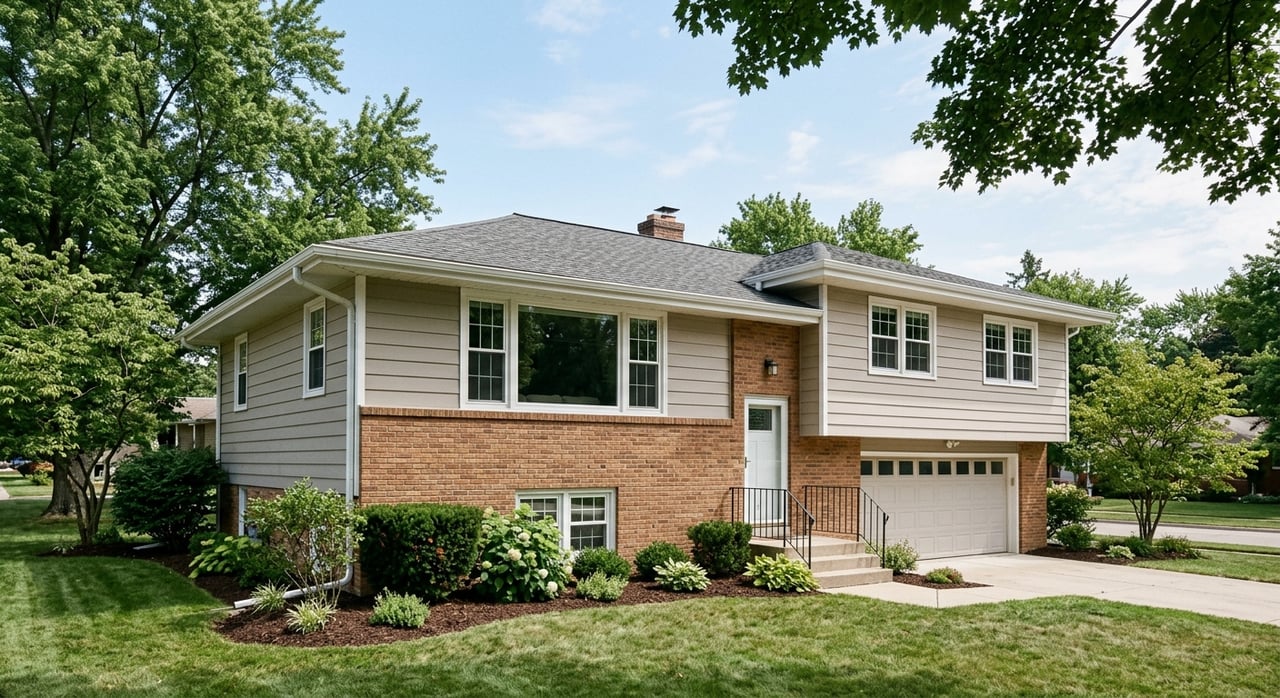
Split-Level Homes
Split-level homes are another familiar postwar form in Wisconsin. These homes typically show multiple visible levels and often include integrated or basement-level garages.
For many buyers, split-levels can feel efficient and practical. From the curb, they usually read very differently from both older character homes and newer subdivision houses because of their stepped massing and garage placement.
Newer Subdivision Styles
West Salem’s growth pattern also helps explain its newer housing areas. The village’s comprehensive plan expects development both inside current limits and in annexed areas, including growth on the east side and west of the La Crosse River.
The plan states that the urban residential district is intended mainly for single-family detached or two-family attached homes with sewer, water, and street frontage. It also says new neighborhoods should maintain single-family character.
For you as a buyer or seller, that usually means newer neighborhoods may feel more uniform in layout and more function-focused in design. You may see more regular lot patterns, simpler streetscapes, and less decorative variation than on older village blocks.
What This Means for Buyers
Understanding style is not just about appearance. It can also shape what you prioritize during your search, from layout and maintenance expectations to lot setting and renovation potential.
If you are buying in West Salem, here are a few helpful ways to think about the local housing mix:
- Historic homes may offer more visual character and unique design details.
- Farmhouse and rural-vernacular homes may feel practical and tied to edge-of-village settings.
- Ranch and split-level homes often appeal to buyers who want straightforward postwar design.
- Newer subdivision homes may offer more modern neighborhood planning and a more consistent streetscape.
Because West Salem has a layered housing stock, your best fit may depend less on one "best" style and more on how you want to live day to day. Some buyers love original character, while others prefer a simpler floor plan or a newer neighborhood feel.
What This Means for Sellers
If you own a home in West Salem, your architectural style can be a real advantage when it is presented clearly. Buyers respond differently to a Queen Anne, a bungalow, a ranch, or a newer subdivision home, and each benefits from a different marketing emphasis.
For example, an older home may need photography and listing copy that highlight original lines, porches, roof shapes, or historic charm. A mid-century or newer home may benefit more from showing layout efficiency, updates, garage function, and everyday livability.
That is where local knowledge matters. When your home is positioned with a clear understanding of how it fits into West Salem’s broader housing story, buyers can better appreciate what makes it stand out.
If you are thinking about buying or selling in West Salem, working with a team that understands the area’s older homes, postwar neighborhoods, and newer growth areas can make the process more confident and less stressful. Favre & Co. combines local market insight with responsive guidance to help you understand what you are seeing and move forward with a clear plan.
FAQs
What architectural styles can you see in West Salem, Wisconsin?
- West Salem includes a mix of historic styles such as Gothic Revival, Queen Anne, Bungalow, Prairie School, and Octagon homes, along with farmhouse forms, ranch homes, split-levels, and newer subdivision housing.
Why does West Salem have so many different home styles?
- West Salem was incorporated in 1851, and its housing developed over many decades rather than all at once, creating a mix of historic, postwar, and newer residential styles.
Where are older homes most common in West Salem?
- Older homes are generally more likely to appear on the village’s older in-town streets, where historic properties and early 20th-century architecture are part of the local housing mix.
What does a ranch home look like in West Salem?
- A ranch home in West Salem is typically low, broad, and simple in appearance, with a horizontal look and less exterior ornament than many older historic homes.
Are newer neighborhoods in West Salem mostly single-family homes?
- Yes. West Salem’s comprehensive plan says newer urban residential areas are intended mainly for single-family detached or two-family attached homes, with an emphasis on maintaining single-family character.
How can you tell if a West Salem home has historic character?
- You can often spot historic character through features like steep or unusual rooflines, front-facing gables, porches, bay windows, decorative trim, broad eaves, or other design elements associated with older architectural styles.