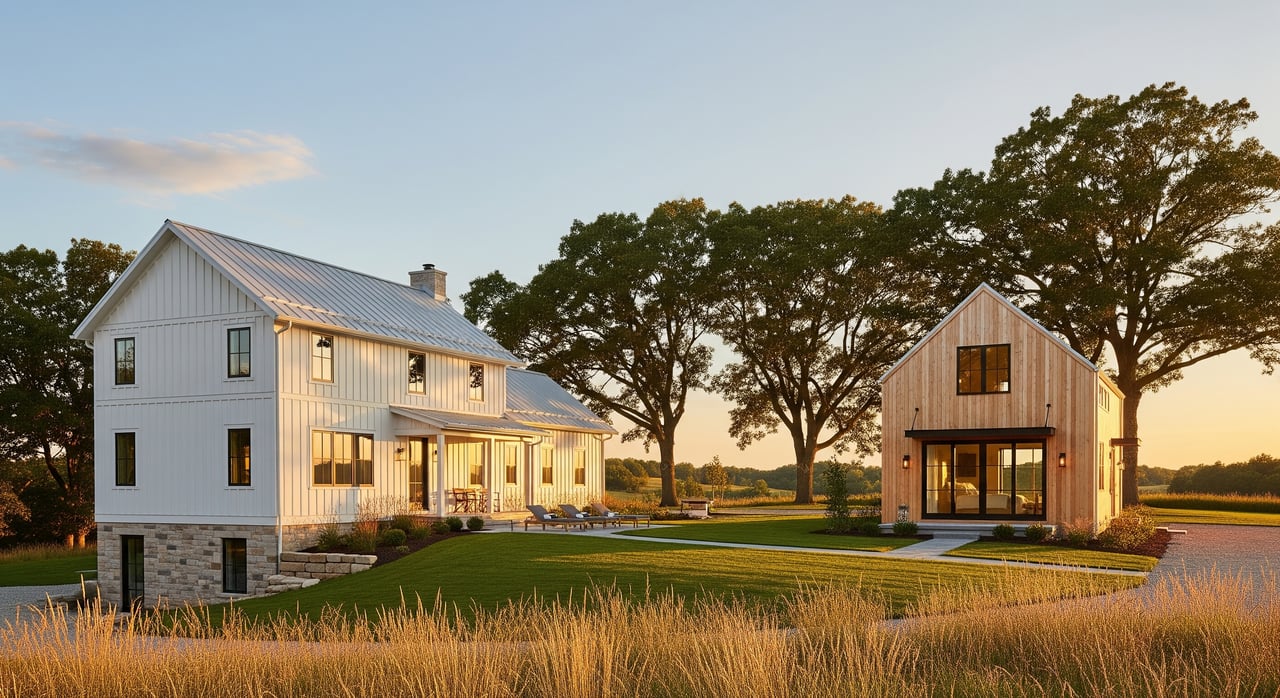
Want to live for less while building long-term wealth in Vernon County? House hacking with a duplex or an accessory dwelling unit can help you offset your mortgage and keep options open for the future. If you’re curious about what’s allowed locally, how to finance it, and what to watch out for with rural septic and wells, you’re in the right place. This guide walks you through duplex and ADU paths, key local contacts, financing choices, timelines, and a practical step-by-step plan. Let’s dive in.
House hacking in Vernon County
House hacking means you buy a property and use part of it to generate rental income. Common models include living in one side of a duplex and renting the other, adding an attached or detached ADU and renting it, or converting part of a single-family home to a second unit if codes allow. In Vernon County, these approaches can lower your net housing cost and create flexibility over time.
You also get access to owner-occupant loan programs for 2–4 unit properties. Rental income can help accelerate your principal paydown and improve cash flow. Some owners also use a second unit for changing needs like an in-law suite or home office.
Why it works here
Vernon County is a rural market anchored by small towns like Viroqua. Rental demand can come from local employers, healthcare, agribusiness, river recreation, and seasonal needs. With fewer large apartment buildings than urban areas, well-located smaller units often fill consistent local demand.
For you, the value is simple: lower net cost, easier loan qualification on multi-unit homes you occupy, and a path to long-term wealth. You can choose long-term rentals, and in some areas consider short-term rentals if local rules allow.
Duplex route: what to check first
Start with zoning. Duplex permissibility depends on the specific zoning district for the parcel and whether the municipality has its own ordinance. In Vernon County, the county and each city, town, and village can set different rules. The Vernon County Zoning & Land Information Office and your municipal clerk are the primary contacts for parcel zoning, setbacks, and use permissions.
Ask the Vernon County Land & Water Conservation Office or County Sanitarian about on-site wastewater capacity if the home uses a private septic system. Many properties in the county are on septic and private wells, and adding bedrooms or a unit can trigger upgrades. For code compliance, the Wisconsin Department of Safety and Professional Services oversees the state’s Uniform Dwelling Code for one- and two-family dwellings, which applies to duplexes.
Key zoning questions for duplexes
- Is a duplex permitted by-right in this zoning district, or is a conditional use permit required?
- Are there minimum lot size or density rules that affect a second unit?
- Are there parking requirements for multi-unit properties?
- Are there floodplain or shoreland overlays that limit alterations?
- What is the process and timeline for permits, plan review, and inspections?
Site and building checks for duplexes
- Septic capacity and setbacks, plus required well separations if private systems are used.
- Egress windows, stairways, and fire safety standards for sleeping rooms.
- Electrical load and whether separate meters are allowed or preferred.
- Sound separation and heating/cooling adequacy for two units.
- Parking availability that meets local requirements.
ADU route: attached or detached
An ADU is a smaller, secondary dwelling on the same lot as your primary home. It can be attached, within an existing structure, or detached. In Vernon County, ADU permissibility varies by municipality and zoning district. Some areas allow ADUs as an accessory use while others may require a conditional use permit or prohibit them.
Before you design an ADU, confirm setbacks, height limits, and parking requirements. If you are considering short-term rental for an ADU, check whether the municipality regulates or restricts it. Then coordinate early with the local building inspector on permits, plan review, and inspections.
Rural septic and well realities for ADUs
Many rural homes rely on private wastewater systems that are sized for a specific number of bedrooms. Adding an ADU often increases required capacity, which can mean an upgrade or replacement. A certified septic evaluation early in your feasibility window can save you from surprise costs and delays. Also check well separation distances, as private wells must meet specific setbacks from septic components.
Utility and metering considerations
Some owners prefer separate electric, gas, and water meters for a clean billing split. Local utility companies determine whether separate meters are allowed and what it costs to add them. If you keep one meter, set clear tenant billing arrangements in your lease and verify that the setup meets building and electrical code requirements.
Financing options for duplexes and ADUs
Owner-occupant financing is often the key to making numbers work.
- FHA mortgages: FHA allows owner-occupant purchases of 2–4 unit properties when you live in one unit. This can reduce the down payment for a duplex.
- Conventional loans: Fannie Mae and Freddie Mac offer programs for 2-unit properties. Down payment and pricing depend on the program and lender.
- VA loans: Eligible veterans can buy up to 4 units while occupying one unit, subject to VA rules.
- USDA Rural Development: Many areas of Vernon County may qualify for USDA Single Family Direct or Guaranteed programs. Duplex eligibility varies by program.
- Renovation loans: FHA 203(k) and Fannie Mae HomeStyle can finance conversion work or ADU construction as part of the mortgage.
- Construction loans: For a new detached ADU, you may need a construction or construction-to-perm loan.
- State and local programs: Explore options through the Wisconsin Housing and Economic Development Authority for potential incentives or loan products.
Keep in mind the owner-occupancy requirement common to favorable loan products. Many programs expect you to live in the property for at least 12 months.
Appraisal, insurance, and taxes
Appraisers value duplexes and homes with ADUs using comparable sales as two-unit or accessory-unit properties. Conversions may not appraise for the full cost of improvements. For insurance, you’ll likely need coverage that addresses both your residence and the rented unit, which can differ from standard homeowner policies. If you consider short-term renting, confirm your policy covers it or add appropriate coverage.
Adding a unit can change your property’s classification for tax assessment. That can affect your assessed value and tax bill. Check with the Vernon County Treasurer or Assessor’s Office on likely impacts, and confirm how owner-occupant credits may change when part of the property becomes income producing.
Run the numbers like an investor
A quick framework helps you estimate break-even and cash flow.
- Gross rent multiplier: Purchase price divided by annual gross rent.
- Cap rate: Net operating income divided by purchase price. Estimate NOI as gross rent minus vacancy and operating expenses.
- Cash-on-cash return: Annual pre-tax cash flow divided by cash invested.
A practical approach:
- Estimate market rent for each unit from local listings and conversations with property managers.
- Subtract a vacancy allowance of 5 to 10 percent.
- Budget operating expenses at 35 to 50 percent of gross rent or itemize categories like taxes, insurance, repairs, utilities, and management.
- Calculate your monthly mortgage payment based on loan type, rate, and term.
- Check whether rent covers mortgage, taxes, insurance, maintenance, and a reserve.
Step-by-step path in Vernon County
- Market research: Gather current rental comps and duplex inventory for Viroqua, Westby, La Farge, Coon Valley, and nearby towns.
- Financial prep: Speak with lenders about FHA 2–4 unit, conventional 2-unit, VA or USDA where eligible, and renovation or construction loan options.
- Zoning and site feasibility: Contact the Vernon County Zoning & Land Information Office and the municipal clerk to confirm duplex or ADU permissibility for the parcel.
- Preliminary inspections: Order a septic and well evaluation if applicable and schedule a whole-home inspection for structure and systems.
- Appraisal and underwriting: Verify how the appraiser will treat a duplex or ADU in this market and what documentation the lender needs.
- Offer and due diligence: Include contingencies for septic/well, permits if converting or building, and financing approval. Request any recent permit history from the seller.
- Permitting: If converting or building an ADU, file for building permits and, if required, a conditional use permit or variance. Coordinate plan review and inspections.
- Renovation: Hire a contractor experienced in duplex or ADU work. Get multiple bids and check references for code compliance.
- Leasing and management: Prepare leases that comply with Wisconsin statutes and set clear utility and maintenance terms. Consider a local property manager if you will be remote.
- Ongoing compliance: Track expenses and income for taxes, stay current on ordinance changes, and prioritize safety and maintenance.
Typical timelines
- Zoning confirmation and a pre-application meeting: 1 to 3 weeks.
- Permits for a conversion or ADU: 4 to 12 weeks depending on complexity and hearings.
- Septic replacement and permitting: 2 to 6 months, often the longest step in rural areas.
- Construction or renovation: 2 to 4 months for small remodels and 4 to 9 months for a new detached ADU.
Tips to reduce risk
- Schedule a pre-application meeting with county zoning and building staff early.
- Order septic and well evaluations before your inspection window closes.
- Add permit and septic contingencies to your offer if you plan a conversion or ADU.
- Ask utilities about meter options and costs before you finalize your budget.
- If you are considering short-term rentals, confirm municipal rules and any deed restrictions first.
How Favre & Co. can help
You do not have to navigate this alone. As a locally rooted team serving the greater La Crosse region, Favre & Co. brings deep market insight, responsive buyer representation, and investment-savvy guidance for duplex and ADU opportunities in Vernon County. We can help you source the right properties, coordinate due diligence with local contacts, and structure offers that protect your interests.
Whether you are a first-time buyer using an owner-occupant loan or an investor planning an ADU build, our team’s systems and communication keep the process clear and on track. If you are also selling a current home, our premium marketing helps you list with confidence and move forward on your timeline.
Ready to explore duplexes or ADUs in Vernon County? Reach out to Favre & Co. to start a focused search and get a tailored plan.
FAQs
Are ADUs allowed across Vernon County?
- ADU rules vary by municipality and zoning district. Confirm permissibility with the Vernon County Zoning & Land Information Office and the municipal clerk for the specific parcel.
Can I buy a duplex with a low down payment?
- FHA allows owner-occupants to finance 2–4 unit properties, and some conventional programs offer competitive options. Talk to local lenders about current requirements.
Will an ADU require a septic upgrade?
- Possibly. Private wastewater systems are sized for a set number of bedrooms. Adding an ADU often increases capacity needs and can trigger upgrades. Get a septic inspection early.
Do I need separate utility meters for an ADU?
- Not always. Local utilities decide whether separate meters are allowed and at what cost. Many owners prefer separate meters for cleaner billing.
Can I use an ADU for short-term rentals?
- It depends on local ordinances and any deed restrictions. Some municipalities regulate or restrict short-term rentals. Check rules before you buy or build.
How do I estimate if rent will cover the mortgage?
- Start with market rent for each unit, subtract 5 to 10 percent vacancy, budget 35 to 50 percent for operating expenses, then factor in mortgage, taxes, and insurance to find your break-even.