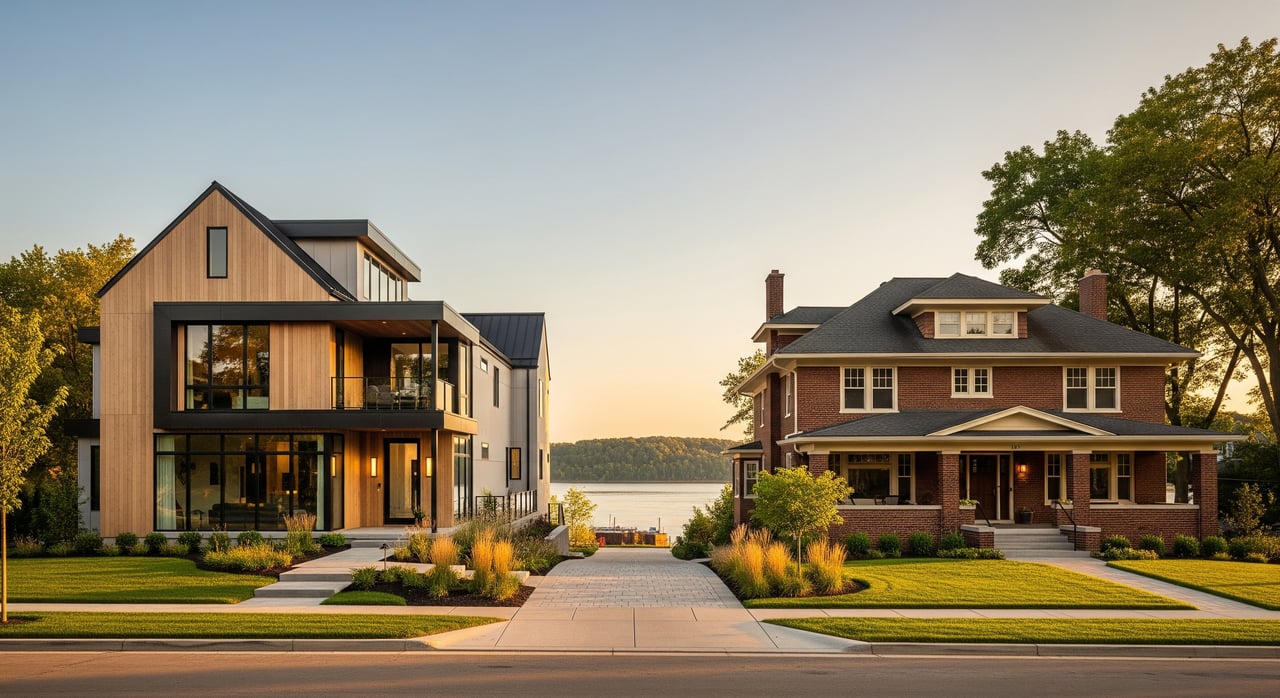
Trying to decide between a brand-new build and an existing home in Onalaska? You are not alone. Each path comes with different costs, timelines, and risks, and the right choice depends on how you want to live and how soon you need to move. In this guide, you will learn how new construction and resales compare in the La Crosse area and what to verify locally, from floodplain maps to permits and financing. Let’s dive in.
Quick Onalaska market snapshot
Before you choose, check local data for Onalaska and greater La Crosse. Focus on median sale price, price per square foot, inventory, and average days on market. These numbers help you understand whether you can negotiate on price, upgrades, or closing costs.
For new construction, review recent building permits and how many homes are under construction versus completed. Lot availability and pricing inside city limits may differ from surrounding townships, so verify lot premiums and utility connections. If you want a current snapshot, ask for a neighborhood-level report so you can compare your short list side by side.
New construction vs. existing: what changes your bottom line
Price and total cost
- New construction often comes with a premium for modern layouts and energy performance. Lot costs can be a big factor, especially with views, elevation, or corner locations.
- Existing homes may be priced lower per square foot. Plan for near-term updates like roofing, systems, or finishes.
- Expect add-on costs with new builds. Appliances, landscaping, window coverings, driveways, and fences can raise your final price.
- With resales, you may negotiate credits for repairs or some closing costs depending on the market.
Timeline and move-in certainty
- New builds typically take several months from contract to move-in. Weather, supply chains, subcontractor schedules, or permits can extend timelines.
- Existing homes usually close in 30 to 60 days once your offer is accepted and you clear inspection and financing. This can be easier if you need to coordinate a sale and a purchase.
Financing and appraisal
- New construction often uses construction-to-permanent loans or separate construction and permanent mortgages. Appraisals can be tricky if the subdivision has limited comparable sales. You may need a plan for appraisal gaps.
- Resales follow standard loan and appraisal paths. If you plan major updates after closing, renovation loans are an option to explore.
Inspections, disclosures, and warranties
- With resales, you will review seller disclosures and should order a full home inspection, radon test, and other inspections as appropriate. Inspection results can drive repair requests or credits.
- With new builds, you still want independent inspections at key stages, such as pre-drywall and final. Builders typically offer limited warranties for workmanship, systems, and sometimes structure, but the length and coverage vary by builder. Read every warranty document closely.
Design and customization
- New homes let you choose layouts, finishes, and new technologies. Production builders may limit choices to preset packages, while custom builds offer deeper personalization with more time and cost.
- Existing homes can offer character, mature landscaping, and established neighborhoods. You can remodel over time to fit your needs.
Energy efficiency and maintenance
- New homes are built to current codes and often include efficient insulation, windows, and HVAC, which can reduce utility bills and maintenance in the early years.
- Existing homes may need system replacements sooner and could benefit from energy upgrades.
Location, lot, and neighborhood feel
- Older Onalaska neighborhoods can offer larger or established lots, mature trees, and proximity to parks and services.
- New subdivisions may provide newer infrastructure and planned amenities, but landscaping can take years to mature and the area may still be building out.
- In the river valley, confirm elevation and flood considerations for both new and existing lots. Flood zones can affect insurance and financing.
Resale value and marketability
- New homes can attract buyers looking for modern layouts and low maintenance, though the premium may compress as the neighborhood ages.
- Established neighborhoods with strong access to La Crosse amenities can be competitive on resale. School district boundaries, commute patterns, and nearby services influence demand.
Onalaska-specific checks before you decide
- Floodplain and elevation. Onalaska is near the Mississippi River and other waterways. Confirm flood zones and any local floodproofing standards before you buy. Flood insurance and lender requirements can impact your monthly budget.
- Utilities. Verify whether the property has municipal water and sewer or requires well and septic. Utility connections and permits affect both cost and timeline.
- Permits and fees. Ask about the current permit workload, inspection timing, and any fee changes. These can affect build schedules and final costs.
- School district boundaries. If schools matter to you, confirm boundaries in advance and factor in how this may influence resale demand.
- Subdivision status and covenants. For new builds, review recorded covenants, HOA budgets, and architectural guidelines. Confirm the expected build-out timeline so you know how long construction traffic may continue.
- Property taxes and assessment. Ask how new construction assessments are handled and when reassessments occur so you can estimate carrying costs.
Practical checklists
If you are leaning toward new construction
- Before you sign
- Request the builder’s license and proof of insurance.
- Ask for sample contract and warranty documents and consider a real estate attorney review.
- Get an itemized list of what is included and the cost of upgrades.
- Confirm milestones, completion dates, and how delays are handled. Ask about deposit protections and refunds.
- Verify lot boundaries, setbacks, easements, and utility corridors.
- Clarify stormwater management, grading, and who is responsible for landscaping.
- Confirm who pays for permits and utility hookups.
- Inspections and walk-throughs
- Schedule independent inspections at pre-drywall, mechanical rough-in, and final stages.
- Complete a final walk-through with a written punch list before closing.
- Financing
- Discuss construction loan options, draw schedules, interest during construction, and appraisal process with your lender.
- Warranty service
- Get the warranty coverage in writing, including claim procedures and response timelines.
If you are leaning toward an existing home
- Due diligence
- Order a comprehensive home inspection and radon test. Consider a sewer scope when appropriate.
- Review seller disclosures for known defects and any history of water intrusion.
- Check tax history, recent assessments, and ask for recent utility costs when available.
- Negotiation steps
- Use inspection findings to request repairs or credits.
- Get estimates from local contractors for major items so you can negotiate from real numbers.
Questions to ask your builder
- What is included in the base price versus upgrades, and can you provide line-item pricing?
- What are the typical build timelines for this floor plan and lot, and what factors could delay completion?
- Which inspections do you permit and at what stages?
- Who provides the structural warranty and what are the coverage limits and terms?
- How are deposits held and what happens if the project is delayed or canceled?
Red flags to watch for
- No itemized upgrade list or unclear allowance amounts.
- Contract limits on independent inspections.
- Vague warranty language or no third-party structural coverage.
- No clear schedule, milestones, or remedies for delays.
- Limited or hard-to-verify references from recent local projects.
How Favre & Co. helps you compare
You deserve a clear, local plan tailored to your timeline and budget. Our team tracks neighborhood-level trends in Onalaska and La Crosse, including lot availability, permit activity, and active subdivisions. We help you weigh upgrade costs against resale value, structure your financing, and design a negotiation strategy that fits current market conditions.
As a full-service team, we handle relocation logistics, virtual showings, and coordinated sell-and-buy timelines. You get responsive guidance, professional presentation, and operational follow-through from offer to closing. When you are ready, we will walk you through side-by-side options, including estimated total cost, move-in timing, and likely resale outcomes.
Ready to compare your specific options in Onalaska? Connect with Favre & Co. for a local plan that fits your goals.
FAQs
How much more does new construction cost in Onalaska compared with a similar resale?
- It varies by subdivision, lot, and included features. New homes often carry a premium for modern layouts and energy performance, while resales may require near-term updates. Review current MLS comps and builder pricing before deciding.
How long does a new build take from contract to move-in in the La Crosse area?
- Many projects take several months, and timelines depend on weather, supply chains, subcontractor schedules, and permits. Confirm milestones and delay provisions in your contract.
Should I hire an inspector for a brand-new home in Onalaska?
- Yes. Schedule independent inspections at pre-drywall and final stages at a minimum, and confirm in writing that the builder allows them.
What financing options are common for new construction in Wisconsin?
- You may use a construction-to-permanent loan or separate construction and permanent mortgages. Ask your lender about draws, interest during construction, and how appraisals are handled.
How are property taxes assessed on new construction in La Crosse County?
- Assessment timing and methods can vary. Ask how and when new homes are assessed so you can estimate taxes during and after construction.
Is flood insurance required for homes in Onalaska?
- It depends on the property’s flood zone and lender requirements. Confirm flood zone status and any local floodproofing standards during due diligence.